
Where It All Begins: Life and Love at Blake
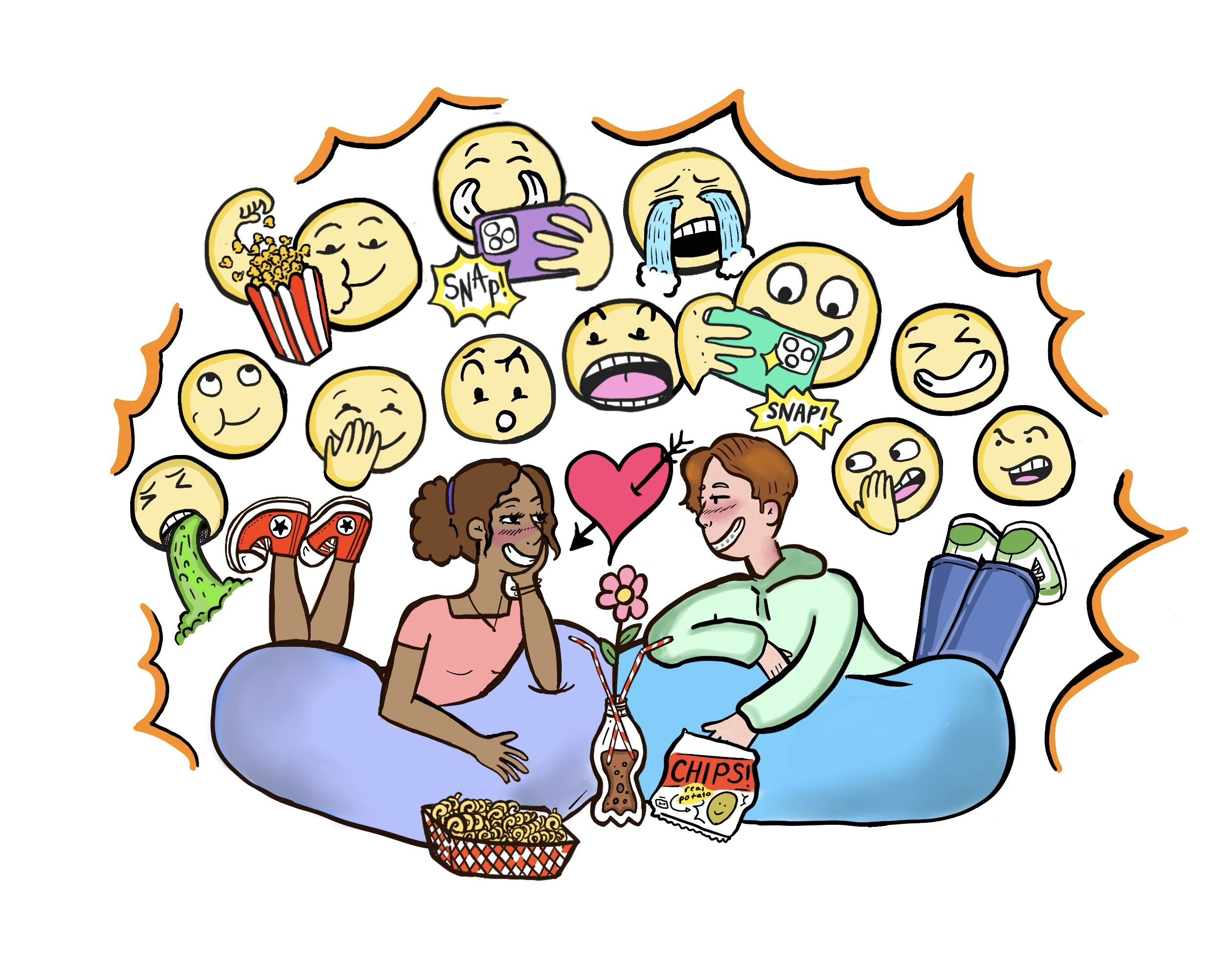
Illustration by Nadine Neutra ’28
______
Cherrie Ma ’28
Step into Blake on any given Friday night, and you’ll be greeted by a familiar scene: the ping pong paddles clack, someone’s blasting the music a little too loud, and near the snack bar–oh look–another budding situationship in progress.
Blake isn’t just NMH’s student center; it’s a live social experiment, but it is also part café, part rec room, and part rom-com set. If you watch closely, the stars of the show are almost always… the freshmen.
For new students, Blake is the beating heart of social life. It’s where groups form, crushes begin, and relationships (official or “it’s complicated”) bloom under the lights. “Freshman year, I spent, like, every night at Blake,” a sophomore said. “It’s where you meet everyone–and also where everyone meets their first campus ‘love story’.”
Indeed, you can spot them easily: two freshmen sharing a snack bar ice cream, others sitting on bean bags hugging each other. The atmosphere is a mix of chaos, curiosity, and mild awkwardness – a perfect storm for teenage bonding.
This dynamic can be understood through the lens of psychology. During adolescence, many teens place major importance on attractiveness and social validation, often linking how they look or who likes them to their self-esteem. When teens don’t feel attractive, self-esteem drops; when they do, it skyrockets. Spaces like Blake give freshmen the perfect social background to test those feelings–to see and to be seen, to experiment with charm, confidence, and belonging.
By sophomore year, though, things change. Most returning students wander through Blake like “retired veterans,” clutching their Shirley temples and shaking their heads fondly at the new class. “It’s like watching a nature documentary,” another student says. “You’ve got the new freshmen trying to impress each other, while we’re just trying to get some food.” This change reflects a broader psychological trend: as adolescents mature, they develop clearer understanding of their social needs and begin prioritizing deeper, more intimate connections over the extensive social interactions of freshman year. The purpose of students going to Blake becomes more intent instead of solely hanging out.
Psychologically, this shift makes sense. As adolescents mature, they begin to gain control over emotional and social impulses, focusing more on trust and authenticity than visibility. Blake becomes less of a social battlefield and more of a background. Noticeably, sophomores start gravitating towards the quieter corners of campus–common rooms, libraries–spaces that fosters deep conversations and connections. Romantic connections become less about being seen and more about being understood.
Experts (and by experts, we mean any upperclassmen who've been through it) say this shift is part of the classic NMH social evolution: freshman year is about exploring, sophomore year is about refining. As people grow more confident and selective, they no longer need the bustling social validation that Blake once provided.
But still–there’s something endearing about it all. The freshmen don’t know yet that one day they’ll be the ones standing by the vending machine, watching this year’s batch of Blake love stories unfold with an knowing smile, knowing that they have once been through it.
