
NMH Tarot
Jane Austin Tarot, Grateful Dead Tarot, Trash Panda Tarot. The world has been inundated with themed tarot decks. So why not… NMH Tarot. An absurd idea, right? But as you will see, it might make a lot more sense than you would think.
600 years ago, a group of men and women from across the eastern hemisphere gathered in Fez, Morocco. They observed at least a half dozen religions between them and were each well-versed in the academic fields of their time. They were each drawn to this city because it offered something extremely rare in the 15th century: academic and religious freedom. Free from the control of religious orthodoxy or tyrants, these intellectuals exchanged, debated, and combined their diverse perspectives. We do not know the names or identities of these seekers of knowledge, but we have the final product of their intellectual exchange–a deck of cards called the tarot.
Fundamentally, the tarot is a deck of playing cards. It has 78 cards, rather than the traditional 52. 56 are “Minor Arcana”, which are divided into 4 suits: swords, wands, cups, and coins (often called pentacles). Each suit has numbered cards, Ace through ten, and four face cards: page, knight, queen, and king. The other 22 cards of the tarot are called the “Major Arcana”. These major arcana each have interesting names, like “The Magician”, “The Tower”, or “Strength”. The minor arcana are numbered as well, counting from 0 to 21.
The tarot deck is also so much more than a deck of cards. Each card has an intricate illustrated design. Inside these designs, the creators of the tarot hid secret words, obscure references, and symbolic imagery. If you know this hidden language of symbols, each card reads like a page in a book. These pages are full of spiritual advice, philosophy, psychology, and even basic chemistry. It’s because of all this hidden wisdom that tarot cards are used in fortune-telling and other magical rituals; it’s also why they look so interesting.
But what does this all have to do with NMH? Our school, throughout its 146 years of history, has struggled with many of the same questions that the students of the tarot have been navigating for the last six centuries. Since our founding, we have been a place where people from diverse backgrounds and perspectives have gathered. During our time as a religious institution, diversity was celebrated because it meant D.L. Moody’s religious message was reaching every corner of the world. Now, as a secular institution, that diversity is celebrated for completely different reasons. Cultural exchange allows NMH students to be challenged by different perspectives, bringing us all closer to the truth.
Though Moody’s faith motivated him to pursue educational equality and racial justice, it also made him an assimilationist. People of every race and class could attend his schools, but Jews, Catholics, or anyone who was not a Protestant Christian could not. For this reason, many at NMH look back at the school’s religious legacy with a certain degree of shame or dismissal. At the same time, there is immense value in the vast majority of Moody’s teachings. After all, it was his own values of equal access and equity between all peoples that led us to reject his work as a missionary and assimilationist. Moody aside, should the entire pursuit of spiritual and religious exploration be thrown out for the actions of some religious people?
It was this same question that faced the creators of the tarot. Each found their way to Fez because they were fleeing conformist establishments, which in the 1500s were almost all religious. Though they rejected religious orthodoxy and freely engaged with other faiths, they did not give up on religion altogether. Had they done so, the tarot would not be so chock-full of religious references and imagery. They walked a middle ground, celebrating the diversity in their ranks, not by setting aside their differences, but by bringing them into plain view, talking about them, and seeking the seeds of truth that bind them together.
The Tarot is physical proof that inclusivity need not be entirely secular, and, if navigated correctly, NMH’s religious history can be celebrated without taking away from our mission of equity and justice for all peoples. So, without further ado, I present issue two’s NMH Tarot reading.
Hello, and welcome to your Tarot reading. Take a seat. Please, make yourself at home. In my hand I hold the tarot deck, a mighty key to ancient wisdom. This is no ordinary tarot deck, but our very own Northfield Mount Hermon tarot. Its designs show scenes and figures that might be familiar to you — the Memorial Grove, D.L. Moody, and the Chateau Dance, to name a few. Rather than the traditional tarot suits, the minor arcana of NMH tarot are instead divided into Spades, Arrows, Lamps, and Bells — all things far better suited to our school.
Now take a moment and think carefully. What answers do you seek? Is there a major life decision you need to make? A complex problem with which you need assistance? Perhaps even a matter of the heart left unresolved? The tarot’s ageless wisdom will show you the right path. Keep your dilemma in mind as we proceed through your reading.
Behold! The cards lay now upon the table. Before us is no ordinary tarot spread; four of its cards are of the major arcana, the mightiest cards of the tarot deck. Feel their power. The fifth is none other than the Ace of Spades, a potent card in its own right. Only the most unique of souls could draw a reading this auspicious from the deck. The Universe surely has much in store for you.
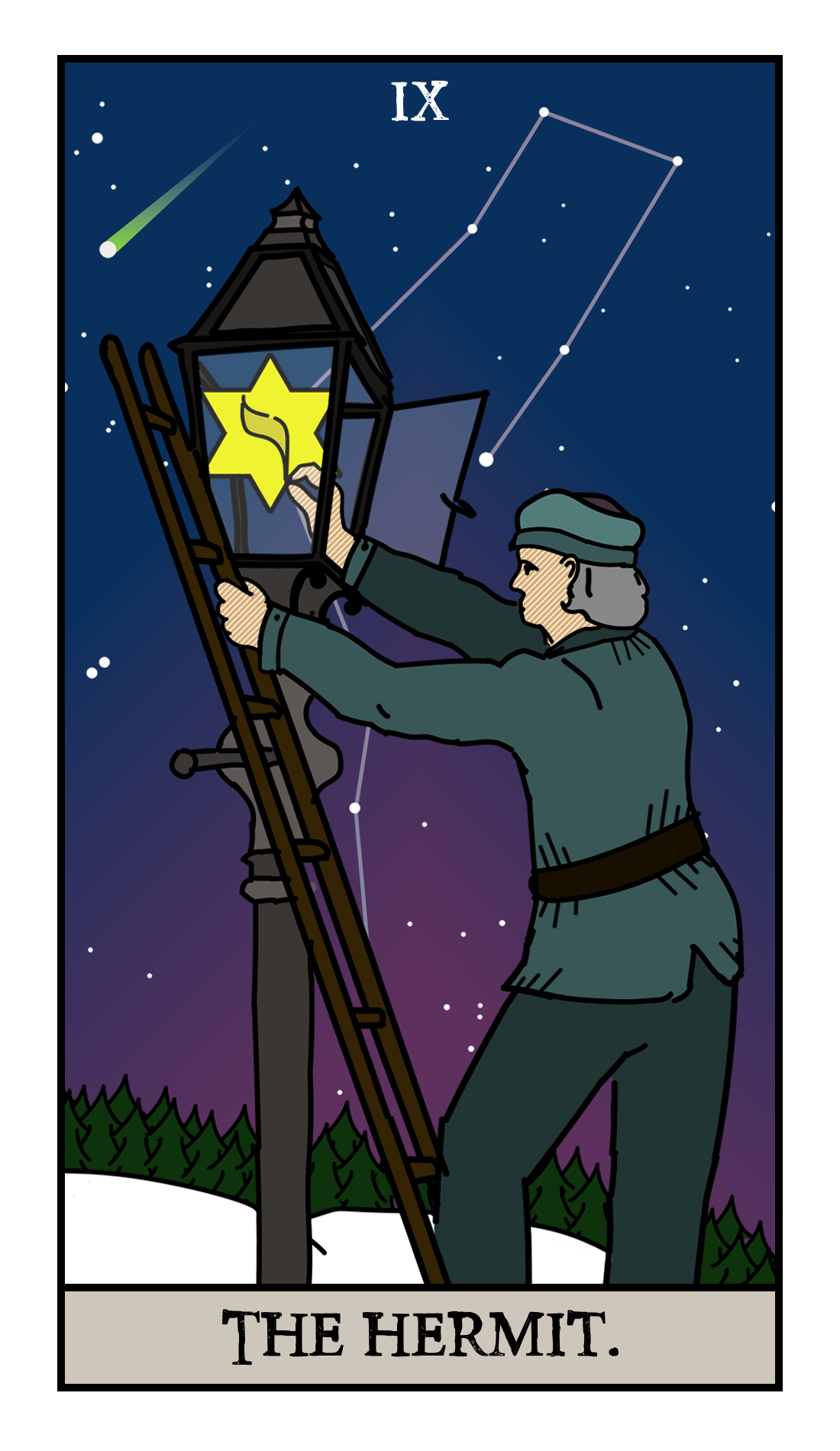
Now, turn your attention to the central card, representing the present moment. It is none other than the Hermit. The Hermit is an enlightened soul who shines the light of wisdom for all to see. But their time here is short. Soon their gas lamp will run dry, and none can say if a new lamplighter will be there to replenish its reservoir of oil. Truth and clarity are fleeting in this world. When you come upon them, drink deeply. Never pass up opportunities to learn.
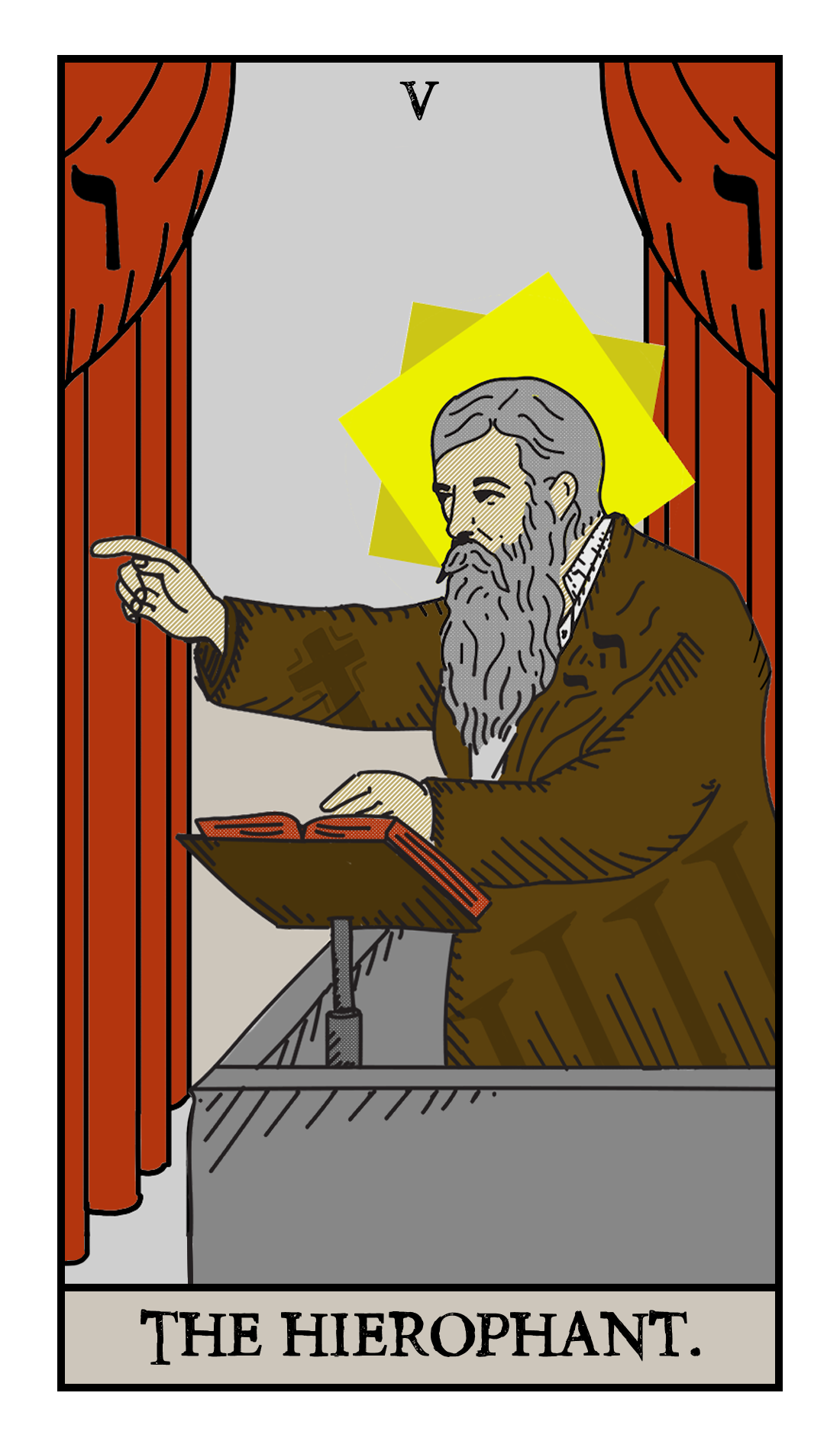
The card placed left of center represents the past. Here lies the Hierophant, meaning “revealer of mysteries” in Greek. This card is none other than our founder, D.L. Moody. Students of the ancient occult associate the Hierophant with the Hebrew letter Vav, meaning “nail”. Religious leaders, like Moody, are the nails that bind the material world to the spiritual world. But even the best nails are sure to tarnish; not all ideas age like wine. DL Moody was as flawed as any man. Even still, our forebearers shouldn’t be disregarded. There’s much to learn from the past, even if it isn’t perfect.
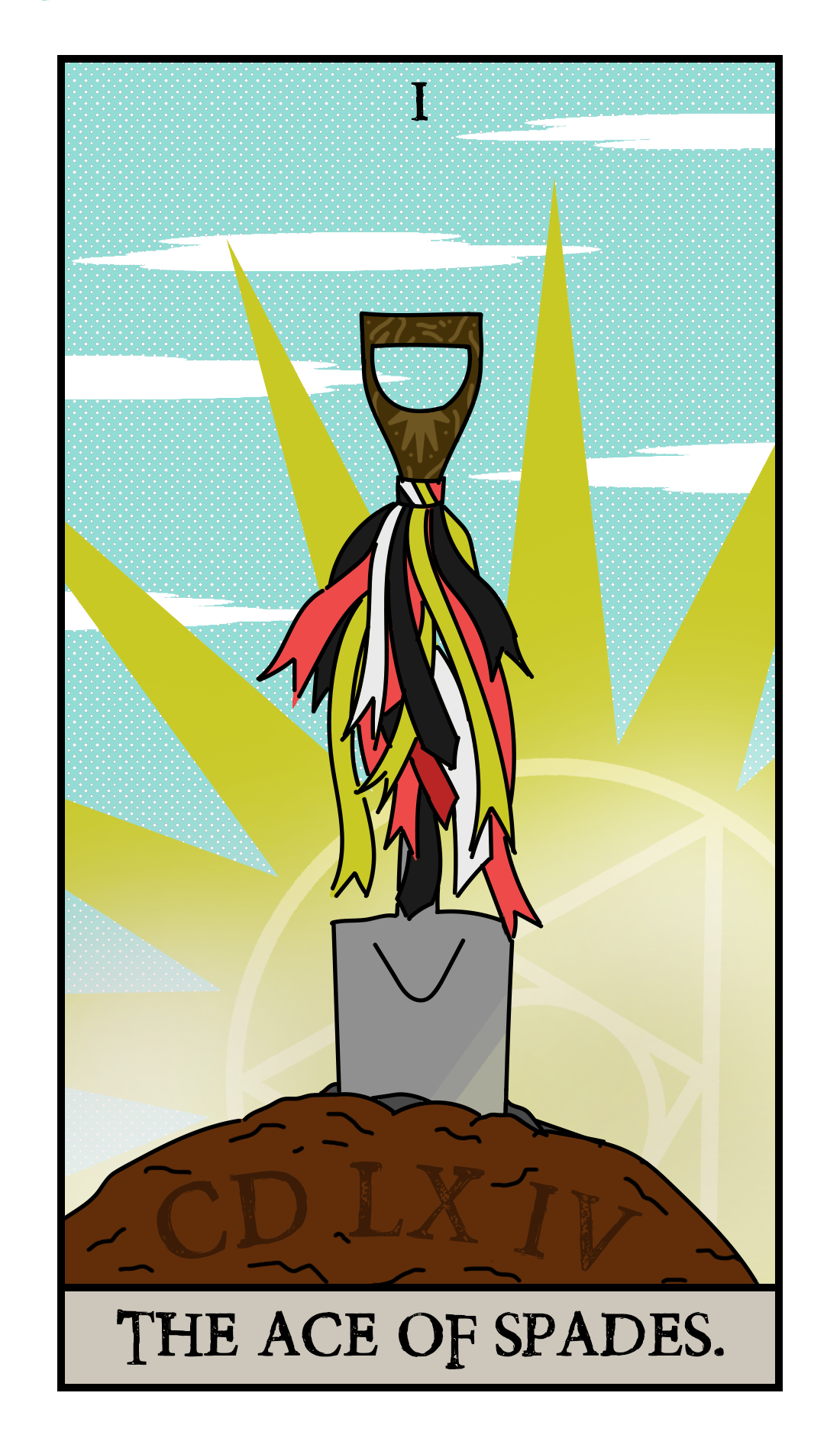
To the right is the future — here, the Ace of Spades. This card represents the completion of the Great Work and the attainment of higher understanding. See that countless ribbons adorn the class spade. Ultimate success is not a solitary pursuit, but a decades-long collective struggle. Success is close at hand if all hands are hard at work.
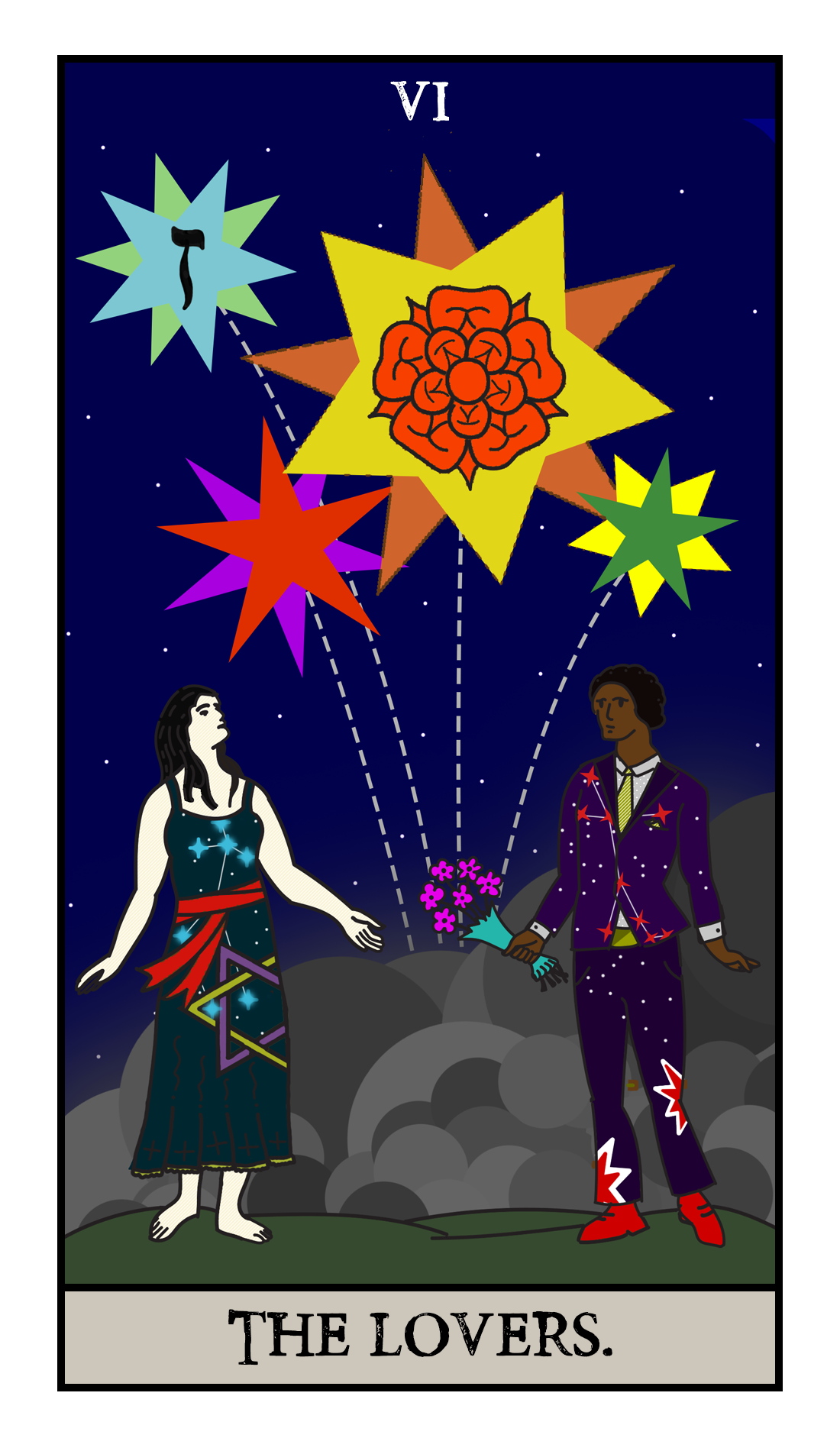
Outside the central three cards are the great powers that shape our world—those which are apparent (far right) and those that are hidden (far left). The Lovers, attending Chat, are the brightness and overwhelming possibility of life. Each day we are flooded with so many choices, but we can only choose a single path. Make these choices carefully, but once they are made, do not linger on paths not taken.
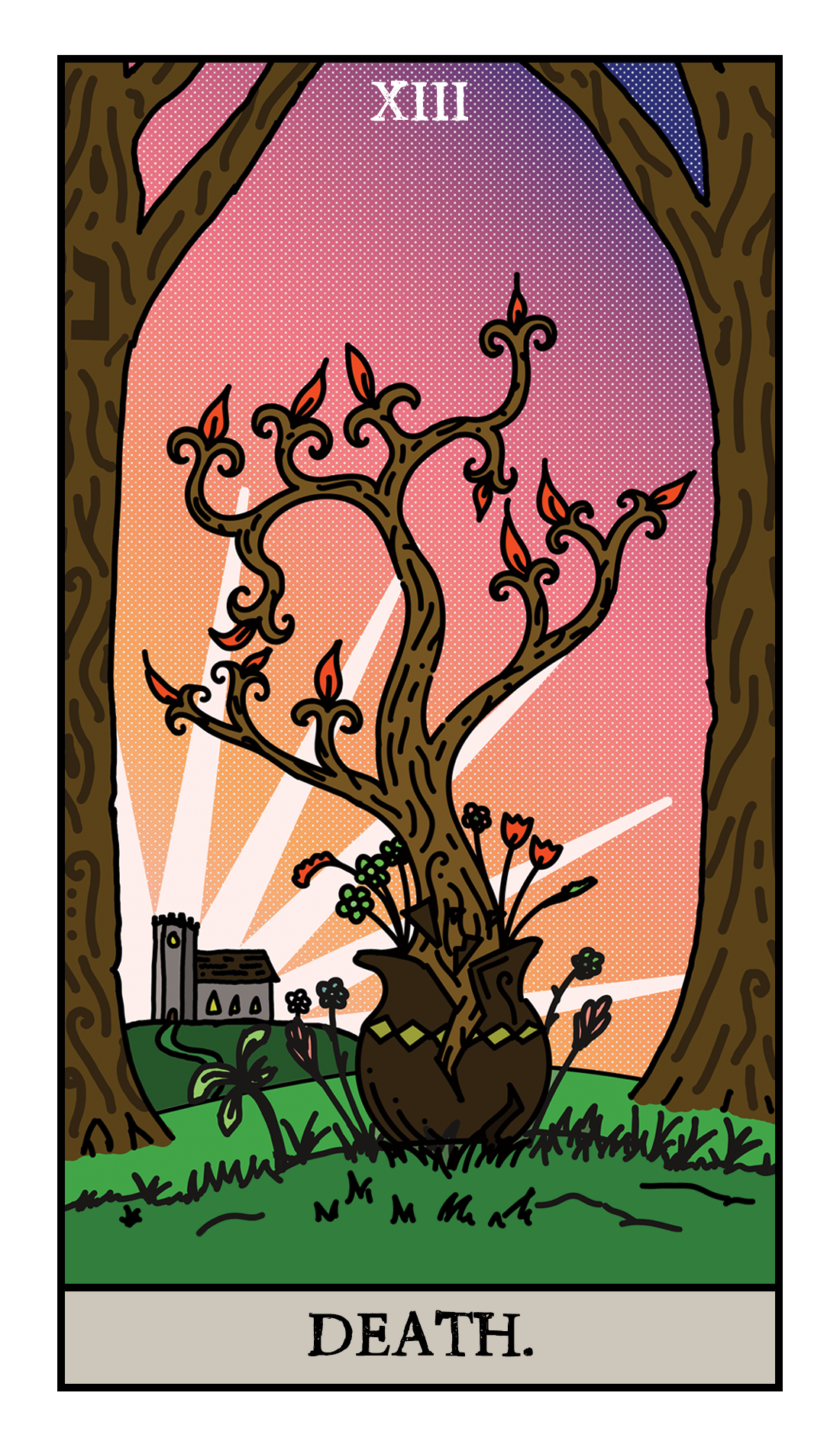
On the other side, Death, and then rebirth. Beneath everything is this eternal cycle. Letting go of one thing will bring another bursting forth from the ground. Change is the only constant of the universe; we have little choice but to embrace it. Material attachments are bound to bring your sorrow. Celebrate impermanence, and yours will be a joyful existence.
Now go! Leave me to my trifles and return to the material plane. But do not forget the tarot. For someday, perhaps quite soon, Fate will draw you back to me. Until then, the cards and their secrets wait patiently.
