
More Than a Weakness: The Strength in Homesickness
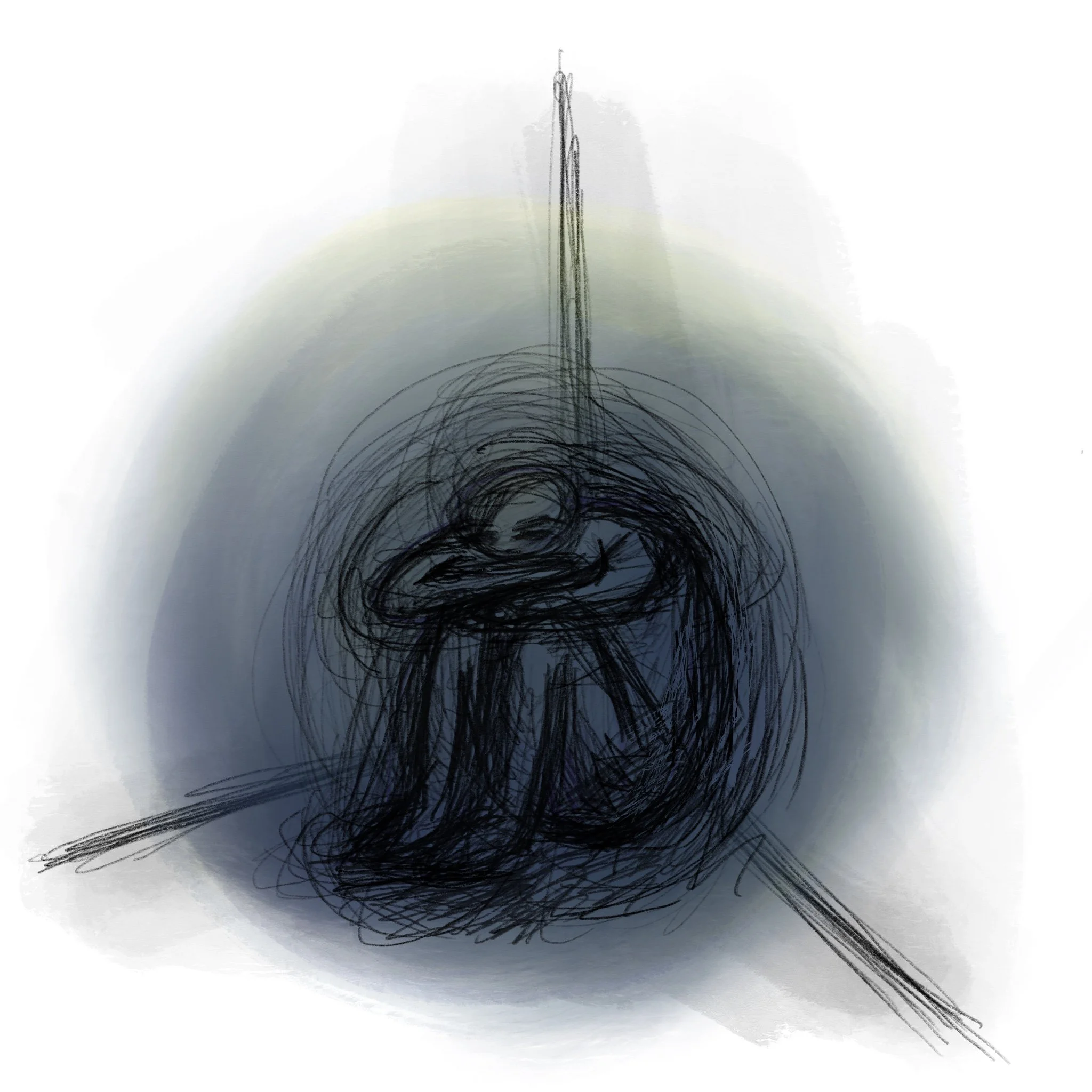
Illustrations by Catherine Bang ’28 & Felicia Liu ’28
______
Kevin Jiang ’29
The quietest moments you experience can feel the loudest in the first few weeks of school. New experiences surround you, from trying out for a sport you’ve never played and attempting to figure out where to sit in the dining hall, to sometimes near the end of a busy day, taking the time to gaze at the faraway hills of a river valley that are not yet home. Sometimes, seemingly out of nowhere, a quiet ache reminds you of the home you left behind: your comfortable bedroom, your awesome desk setup, that view you get out of your windows, and the smell of your mom’s cooking. This emotional experience is what each student, especially if you are a freshman, deals with upon arrival to NMH.
“When I first came to NMH, I felt very lonely. I felt like this was not where I belonged because it’s an entirely new community I've never been a part of,” said Sean O ‘28. This sentiment of feeling small and alone when in a new place is also shared by Eric Zhao ‘27 “After the first few weeks when I first came to NMH, always excited and busy, I started missing that old life in China, especially my family as well as my two cats.” The Merriam-Webster Dictionary describes this feeling as a “longing for home and family while absent from them” — what we commonly know as homesickness.
We often think of homesickness as a sign of weakness, something we should hide behind a tough shell. But real strength comes from taking that armor off and showing our true feelings, replacing silence with conversations. Telling a dorm parent, a resident leader, or a new friend that you're struggling, initiates an exchange of trust. This courageous step breaks the isolation that homesickness thrives on. When one student admits they miss their family’s Sunday routine, it gives another permission to share how much they miss them. This shared vulnerability creates the essential foundation for genuine, lasting circles of friendship. It turns homesickness from a personal grief into a shared experience, cementing the bonds of our river valley community.
“There are times when I'm talking with my family and I miss them a lot,” said Michael Edokpa ‘29 “but because I've found a circle of friends to be with, I don't find myself being too homesick or lonely. Katherine Yao ‘27 also resonates with this. During her first year at NMH, especially in those first few months, homesickness weighed on her. But connection helped. “Reconnecting with my friends and bonding with those around me who also had shared experiences helped me get over my homesickness,” she says. “It also helped me form new friendships across the years.”
“[Dealing with] isolation is really big when it comes to homesickness, so you don't feel alone,” said school counselor Jamecia Estes. “Disclosure and vulnerability from other peers is probably one of the top things that I could see [to help students connect].” This shared experience becomes a key way that a community can build and grow, also making it a crucial part of growing up and learning who you are as a person.
Jamecia elaborated on this idea. She suggested that homesickness can be essential for the growth of resilience, and she emphasized that the core message is perspective. “Homesickness is not a weakness,” she said, “it’s something that happens to you, not something that identifies you.” Homesickness is acknowledged as a part of the human experience, creating an opportunity to see yourself more clearly. We see this daily on campus. A student might find solace in a quiet corner of the library that reminds them of their room back home, or perhaps they discover a new favorite campus café that becomes the backdrop for new memories. When Katherine was asked about a place where she feels most comfortable on campus, she noted, “I would say my room because I put up a lot of posters that remind me of home, and I have a lot of Asian snacks too. Another one of my favorite places on campus would be the dance studio, because dancing is really fun for me so it makes me feel like I'm in a safe place.” So decorating your room in a certain way, going to a dance or a sports game, or even hanging out in the common room become small acts of finding comfort in a new environment. It’s not an effort to replace the old home, but an act of creating a new, second home, one where you would feel the same level of comfort and consolation.
Feeling homesick not only applies to us students, but also to faculty members, rendering it a universal experience. Grisha Hatavets, a new faculty member in the Math department, reinforced this idea. He described how homesickness intensifies around personal moments, like family birthdays or holidays, saying “I miss the family gatherings that I used to have when I was a kid.” Grisha also talked about how he dealt with homesickness so that he could see it as a positive thing, “I don’t feel sad or homesick if I stay busy. If I have something to do, you know, it’s… you don’t have time to get homesick. That’s definitely been helpful for me,” he said. By actively seeking for engagement in school extracurriculars, whether that's student-led clubs, sports teams, or art programs, it shows that the key to transforming homesickness is redirecting the discomfort of isolation into the pursuit of community.
Confronting homesickness pushes all of us to face loss and uncertainty, allowing us to grow and discover more about ourselves. Seeing homesickness as a strength recognizes the power of memory and the emotions such memories evoke. As counselor Jamecia said, “It is not a weakness, but a profound human experience that forces you to define and re-establish your identity here at NMH.” The challenge all along was never to suppress that feeling of homesickness and keep it all bundled up within you. Rather, homesickness provides an opportunity to drop the armor and talk to your peers about the ache for home and the love from which that ache was borne. Instead of seeking a cure, we should recast homesickness as a compass point for what we value most, a navigation point from where we create new experiences, encounter new people, new places, ever broadening the landscape of who and what we call home.
