
Camaraderie Built in the Gym
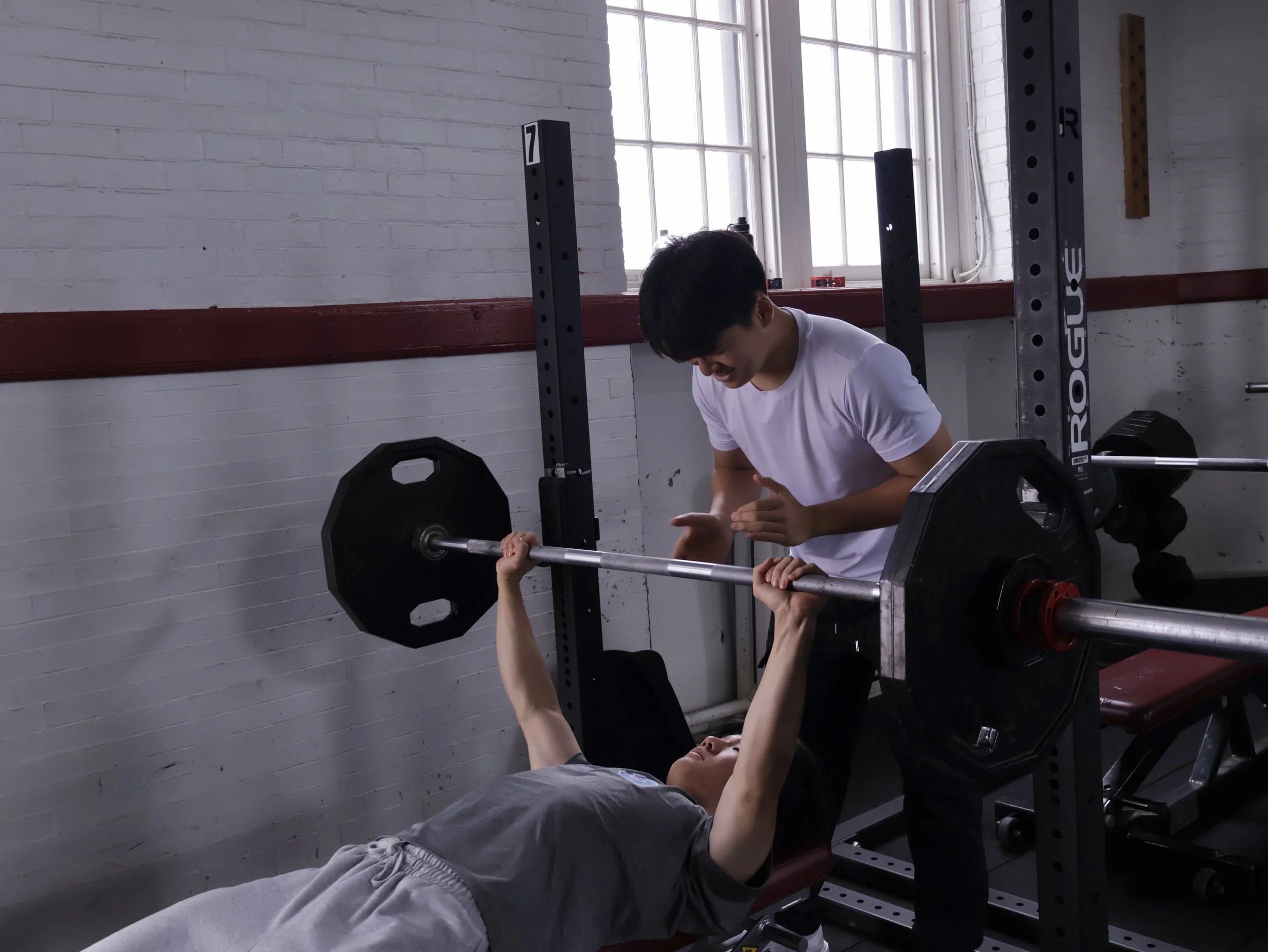
Photos by Yeolim Yang ’28
______
Raon Kang ’28
“Success, like happiness, cannot be pursued; it must ensue,” said Viktor Frankl, a renowned psychiatrist.
Success is the outcome of constructive input based on effort, not a mere desire. The same logic applies to growth, as results only follow after the initial stage of pain. Perhaps this trade-off between pain and gain explains why so many students at NMH choose to go to the gym. Gym exercise involves heavy weight lifting that causes microscopic tears in muscle fibers, cardiovascular exercises that pump the heart up to 200 beats per minute, and the constant mental fight to push the body to its limit. Despite the excruciating pain and the students’ busy schedules, they spare their limited free time to work out at the gym instead of scrolling through Instagram Reels. Friends make all the difference, turning this redundant daily task into a fun shared experience.
Peers are the ones who motivate students to push themselves to go to the gym consistently despite the continuously arousing temptation to give up. Although having workout partners may not seem as significant at first glance, friends challenge the students to push through the very last rep of the set, spot them in the risk of getting crushed by the weights, and give applicable advice that is essential for progressive overload.
“The biggest part of what drives me to work out is seeing all my friends collectively hit the gym together. That really creates a feeling of community,” says Kian Lee ‘28. The sense of community that he refers to is fostered by the adhesive bonds between peers. In the gym, everyone cheers and supports each other in the face of a challenge, no matter how experienced they are. Students are unhesitant to reach out and give advice because they understand that their peers put themselves in a vulnerable position to improve themselves. Ultimately, this positive, close-knit gym environment where everyone feels included and revitalized contributes to the formation of unique camaraderies.
While having gym peers can result in a collaborative outcome, it can also drive competitiveness. “Comparing bench, squat, and deadlift personal records, and who is stronger drives competitiveness for me,” says Lee. Competition is often considered a negative factor that belittles someone by putting oneself in a higher position. However, when it comes to exercising at the gym, competition is an indispensable aspect that serves as a motivation to put in more effort into the workout. Not only that, it also provides a comparative milestone for long-run progress, which would otherwise be difficult to track.
In most cases, students tend to form a group of friends with common ground to go lift together. Whether that is having similar schedules, living in the same dormitory, or being in the same grade, having some sort of commonality offers a mutual understanding of one another. A huge advantage of being in a group is that it provides a sense of belonging and individual responsibility, making it far less challenging to stick to the workout plans.
“In my freshman year, the biggest part of my life was about going to the gym with my friends in C1 and just having fun,” says Eric Zhao ‘27. Especially for the freshmen, who are still adjusting to the new school environment, going to the gym with friends helps manage their homesickness and loneliness. The gym is not just a place to work hard and exercise. It is a place where students socialize and make new friends whom they have not known before. Zhao mentions how he first met Calvin Hills, Luke Slesar, and Wilson Cheung in the gym, who became his close friends.
“They taught me how to do all sorts of different gym exercises with correct form,” he says, referring to friends as his “gym professors.” Although working out as a group has its own benefits, having just one close gym partner can also make a huge difference in one’s overall gym experience.
“Last year, when I was a freshman, I was not very consistent with the gym,” says Charlie Li ‘28. However, moving onto his sophomore year, his new neighbor, Eric Wang ‘28, encouraged him to continue lifting and even taught him scientific methods of lifting to get stronger and faster. Thanks to his neighbor’s influence, he was motivated to “lock in and work harder.” He now lifts six times a week on top of his intense varsity swimming practices. Wang, exactly like how he inspired Charlie to continue lifting, was introduced to the gym by “an extremely fit Ukrainian friend back in middle school in the UK.” Sometimes, all it takes for a positive gym experience is one close friend whom they can look up to and learn from.
For the beginners, seeing their friends curl 40 pounds, squat 3 plates, and bench press double their body weight could make them feel small. It could even make them want to quit or doubt the whole point of this voluntary suffering. However, it is important to acknowledge that their peers are there to support, not to devalue or judge them for their current status. Without their existence, working out would be far more arduous and monotonous. Friends are our companions who make the experience much richer with excitement and long-lasting memories.
